








Since its invention in the 2nd century AD, paper has undergone a series of transformations relating to the place of manufacture and the material used.
At the end of the 13th century, the paper makers of the municipality of Fabriano innovated Arab paper, using linen and hemp. Thanks to them, Italian paper has different formats and a different watermark, with better quality. Its affordability allows it to be spread throughout Europe.
In the mid-14th century, the primacy of Italian paper was supplanted by paper produced by new paper centers located in France and Germany.
Towards the second half of the 15th century, due to the high costs of machinery, production moved to Holland. The Dutch were responsible for inventing machines capable of producing whiter and more homogeneous paper, even if less resistant.
In 1798, Louis-Nicolas Robert patented a new machine, marketed by Didot Saint-Léger, owner of the Essonnes paper mill. In 1803, the machine, whose operating system was inspired by the same underlying steam engine, was perfected: the industrial production of paper began.
Thanks to the use of wood pulp as a raw material, production becomes mass production and paper becomes a widely consumed product. Newspapers and novels begin to spread, at cheap prices.
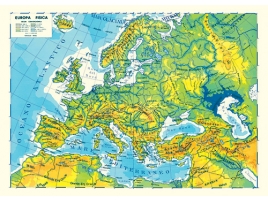
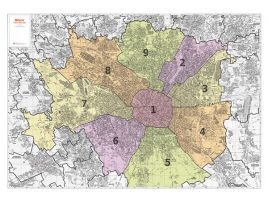
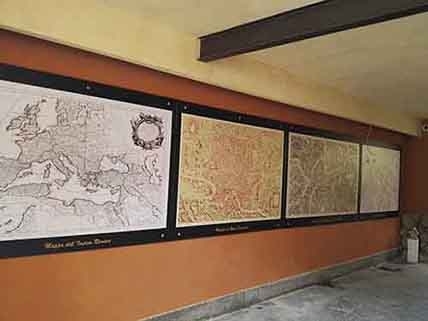
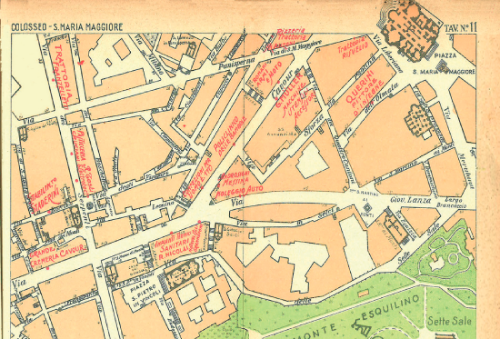
The abundance of low-cost industrial paper allows us to differentiate its uses: paper is exploited by the food sector, clothing, as well as advertising, with the first posters. Cartography produces maps of considerable importance.
Cartografica Visceglia carefully selects the paper with which to create its maps and provide a quality product to its customers
Discover our offer on the site!