









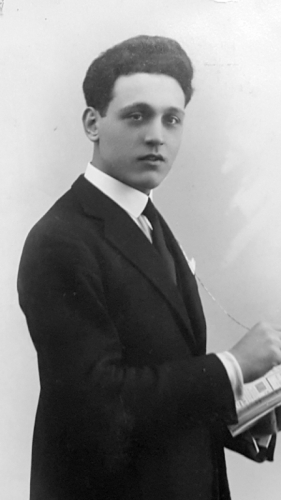
Vincenzo Visceglia, founder of Cartografica Visceglia, was born on 30 January 1903 in Salandra, in the province of Matera.
After moving to Rome and earning a degree in physics and mathematics from the University of Rome in 1928, Visceglia began teaching at a high school in the capital.
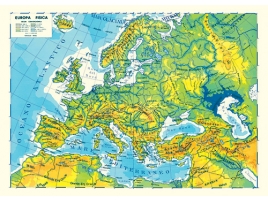
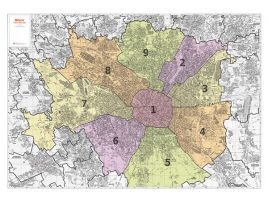
His passion for geography led him to become interested in cartography, understood as a system of measurements, technical applications and artistic skills through which to reproduce the Earth on a flat surface. So it was that at just twenty-five years old, in 1929, he founded his Geographical Institute, whose first publication was the "Toponymy Guide to Rome", an innovative map of the capital, divided into tables and containing the house numbers of the different areas.
In the sixties, Cartografica continued its activity, publishing updated plans of the provincial capitals, the collection of which constitutes the urban planning Atlas of Italy.
After a long illness, Visceglia died on 5 October 1971 in Rome, leaving the publishing house in the hands of his daughter Rosangela and then of his granddaughter Laura, who made her grandfather's teaching her own and carries it forward today with love and dedication. A road in the Vallerano-Trigoria area, south of Rome, was also dedicated to Vincenzo Visceglia.

In oltre 40 anni della sua attività, Vincenzo Visceglia ha realizzato molte cartografie arricchendo così un archivio di eccezionale valore documentario, dichiarato dal Ministero della Cultura nel 2015 d’interesse storico particolarmente importante.
Esso si è affermato nel panorama culturale italiano con la realizzazione di vere e proprie opere cartografiche trasversali a diversi mondi.
Da oltre 90 anni, la sua casa editrice continua a proporre prodotti di eccellente qualità ed è custode di una tradizione significativa.
Quella di Vincenzo Visceglia è stata un’impresa nata da un sogno che è divenuto reale, che continua tutt’oggi, grazie a un motto che sprona a cavalcare il cambiamento, senza lasciarsi abbattere dall’insuccesso.
“Nessuna paura del futuro, nessuna venerazione del passato. Chi teme l’avvenire e l’insuccesso limita la sua attività. L’insuccesso è soltanto un'occasione per ricominciare in modo più intelligente”.